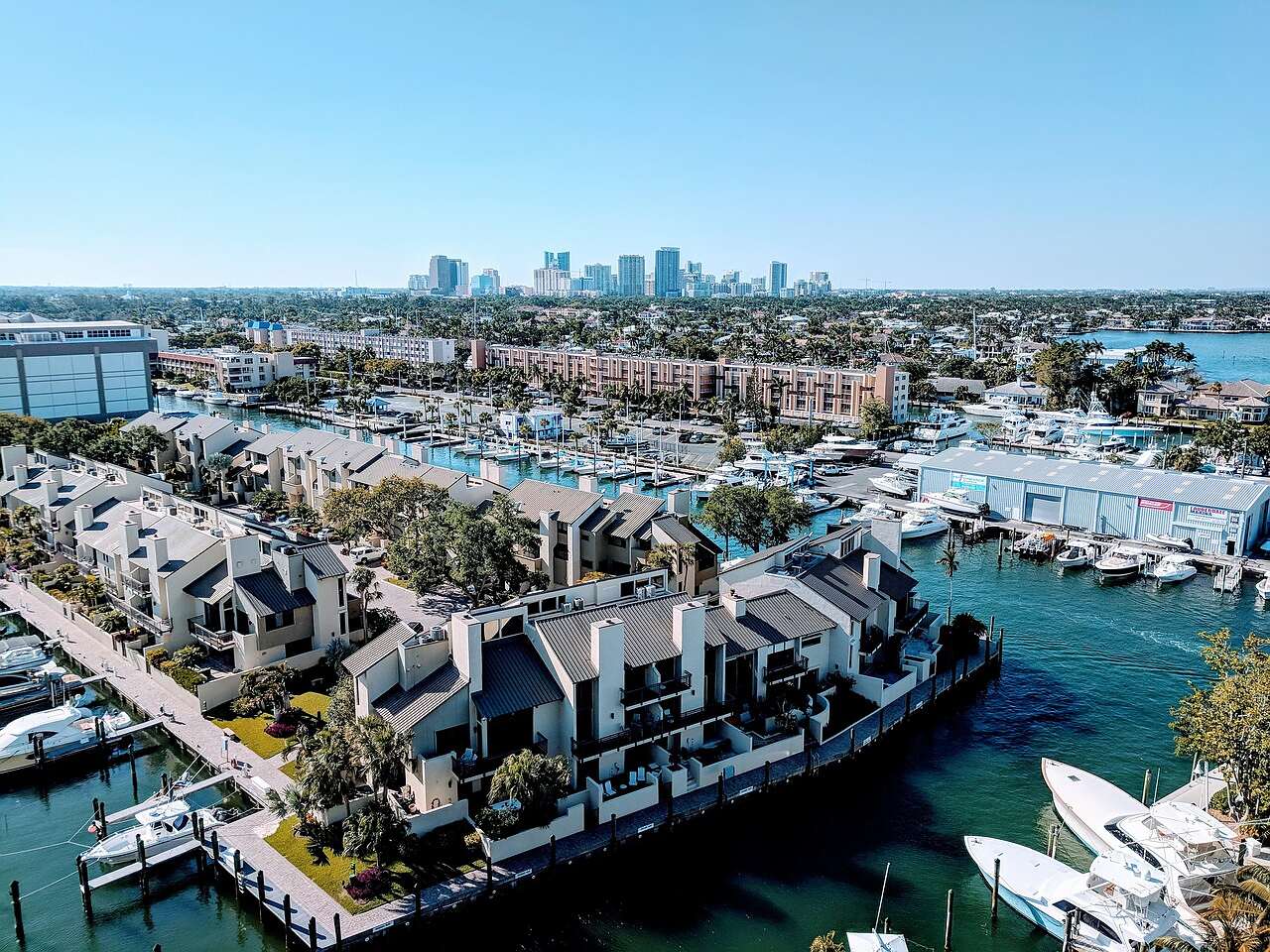
Commercial Rodent Control in Fort Lauderdale, FL
Documented rodent programs for condo boards, property managers, restaurants, marinas, warehouses and older commercial blocks across Fort Lauderdale and Broward County, run by FDACS-licensed contractors.
What commercial rodent control in Fort Lauderdale includes
Commercial rodent control here is a documented program: a free inspection of the whole property, sealing of the entry points found, trapping or a licensed bait-station program sized to the site, and a written record after every visit that a health inspector, a board or an owner can read. It is quoted in separate lines so a manager can approve the sealing and the monitoring on their own terms.
The property type sets the shape of the program. A restaurant on Las Olas needs a service log for the health inspector and a dumpster enclosure that stops feeding Norway rats. A twelve-story condo on the Intracoastal needs a roof deck sealed and a report the board can vote on. A marina needs the dock line, the fuel dock and the ships store handled as one site. A warehouse west of I-95 needs dock doors, roofline and racking treated together.
- Site-wide inspection at no charge: roofline, roof deck, mechanical penthouses, soffits, dock doors, dumpster enclosures, sea walls and dock areas, trash rooms, mechanical and electrical rooms, ceiling plenums
- Exclusion with metal: bird stops on tile eaves, galvanized hardware cloth at vents and louvers, sheet metal at soffit returns, brush seals and steel plates at dock and service doors (see rodent exclusion)
- Trapping inside the structure, or exterior tamper-resistant bait stations under an FDACS pest control business license where the site calls for them
- A service log and a site map after each visit, written for a health inspection, a board packet or an insurance file
- Clearance letters for a unit dispute, a lease turnover or a sale (see rodent clearance letters)
Tenants and residents feel this the way homeowners do. A unit owner who hears scratching over the bedroom at night and is told by the front desk that it is probably the AC is losing sleep in a home they pay a maintenance fee for. Getting the source found and the finding in writing is what settles the building down.
Norway rats at ground level, roof rats on the roofline
Fort Lauderdale commercial property gets both rats, and they arrive at opposite ends of the building: the Norway rat burrows and enters at grade near sea walls, dock areas and dumpster enclosures, and the roof rat climbs and enters at the parapet, the tile eave and the roof deck. A program that handles one and ignores the other leaves half the building open.
| Species | Where it turns up on Broward commercial sites | How to tell | What the program does about it |
|---|---|---|---|
| Norway rat | Burrows behind sea walls, under dumpster pads and slabs, dock areas, older commercial blocks, loading docks | Heavy-bodied ground rat, seen at grade after dark; burrow entrances in soil and under pads | Grade-level sealing, enclosure and door work, exterior tamper-resistant stations under license |
| Roof rat | Rooflines, parapets, tile eaves, roof decks, mechanical penthouses, palms and fruit trees on the grounds, ceiling plenums | Slender, 12 to 14 inches including a tail longer than head and body; droppings a quarter to half inch with pointed ends (UF/IFAS) | Roofline exclusion with metal, trapping in plenums and attic spaces, tree and frond clearance |
| House mouse | Kitchens, break rooms, storage, wall voids; a minority of Broward calls | Small; droppings far smaller than a rat's | Interior sealing to a quarter inch and trapping |
UF/IFAS ranks the roof rat as Florida's worst and most abundant rodent pest and notes that it breeds through the year here, which is why a Fort Lauderdale building with a roofline entry refills quickly. The species also ranges roughly 150 yards from its den, so a marina, a restaurant and a condo tower on the same block are usually sharing one population.
Signs of rodents in a Fort Lauderdale building
Complaints from more than one unit or tenant on the same side of a building, droppings in a trash room or a mechanical room, and burrow openings along a sea wall or a dumpster pad are the three signs that move a manager from a single unit call to a building program. Any one of them justifies the free inspection.
- Scratching or running overhead reported by several units on the same floor or the same stack after dark
- Droppings on top of ceiling tiles, along a plenum, on a roof deck, in a trash room or an electrical room
- Gnaw marks on door sweeps, dock door seals, conduit, low-voltage wiring and AC line-set insulation
- Burrow entrances in soil behind a sea wall, at the base of a dumpster enclosure or under a slab edge
- Grease rub marks along a parapet, a pipe run or the top of a party wall
- A musky odor in a stairwell, a chase or a corridor
- Fruit hollowed out under a mango, avocado or citrus tree on the grounds, and palms with skirts of dead fronds against the building
Roof rat droppings settle the species question on a roof deck the way they do in a house: UF/IFAS puts them at a quarter to half an inch, curved and pointed at both ends. Droppings found at grade beside a burrow point to a Norway rat, and the two findings call for different work.
Sealing first, then trapping or a licensed bait program
Exclusion runs first on every commercial program, because rodent control on a building with open entry points is a subscription to the same problem. Trapping and bait stations are the second layer, chosen for the site, and both are documented.
Exclusion with metal
Openings are measured against the UF/IFAS rat-proofing standard of a quarter inch and closed with materials that last: a code-approved metal bird stop along tile eaves, typically 26 gauge galvanized or aluminum, galvanized hardware cloth at louvers and vents, sheet metal at soffit returns and parapet gaps, brush seals and steel kick plates at dock and service doors. Expanding foam on its own is chewed out and is what a cheap quote usually means.
Trapping inside
Snap traps in plenums, chases, attic spaces and trash rooms, left at least a week because roof rats avoid new objects, checked on a schedule with every carcass removed. UF/IFAS makes the point that trapping avoids the risk of a poisoned rat dying inside the structure, which in a condo tower means inside somebody's ceiling.
Exterior bait stations under license
Where a site has Norway rat pressure from a sea wall or a dumpster enclosure, exterior stations can be part of the program. Any rodenticide program for hire requires an FDACS pest control business license with a certified operator in General Household Pest and Rodent Control. The EPA restricts second-generation anticoagulants to tamper-resistant bait stations in residential settings and has withdrawn them from consumer products, and most rodenticides are anticoagulants that kill four days to two weeks after feeding begins, so station placement and the service log matter.
| Approach | Fits | Where it fails on a commercial site |
|---|---|---|
| Bait stations only | Nothing on its own | Entry points stay open; animals die in plenums and walls; complaints continue |
| Trapping only | Nothing on its own | The building refills from the roofline or the sea wall |
| Sealing plus trapping | Condo towers, offices, retail, restaurants | Needs a verification visit and a log to prove it |
| Sealing, trapping and licensed exterior stations | Marinas, waterfront restaurants, warehouses, sites with burrows | Requires the pest control business license and tamper-resistant stations |
How do rats move between units in a condo building?
Rats move between condo units along the shared structure: the roof deck and the eave above the top floor, the party walls and the chases inside them, the plumbing and electrical penetrations that run floor to floor, and the trash rooms and chutes that connect every level. A complaint from one unit almost always describes an animal that is using several.
Roof rats enter a Fort Lauderdale tower or a garden-style building at the top, through a tile eave with a missing bird stop, a mechanical penthouse louver, a roof deck expansion joint or a parapet gap, then drop into the ceiling plenum and travel the party wall to whichever unit has food, water or a warm pipe. The unit owner hears it; the board owns the opening. That is why the program seals the common elements first and traps in the plenum, and why the report records the location of each finding so the board can see which side of the line it sits on. Palms and fruit trees on the grounds within about six feet of the roofline are the route onto the roof and get noted for the landscape contractor.
What documentation does a health inspector want to see?
A health inspector wants a current pest control log that shows who serviced the site, under what FDACS license, what was found, what was done and where every station or trap sits on a map. The same packet is what a condo board needs to vote on a program and what an insurance adjuster asks for after rodent damage.
The contractor we route produces a site map with numbered stations and traps, a dated log for each visit with findings and actions, the license number of the business, a list of sealed openings with the material used, and photographs. For a restaurant the log lives at the site. For a condo the manager gets a report after each visit and a summary the board can attach to minutes. For a lease turnover or a sale, the same records feed a clearance letter. Ask whoever attends to show a sample log before the program starts; a company that has none is selling visits with no record behind them.
What commercial rodent control costs in Fort Lauderdale
Commercial pricing is built from the same parts as residential pricing, inspection, exclusion, trapping and any ongoing service, scaled to the size of the site and the number of tenants or units, and quoted in separate lines after the free inspection. The bands below are national typical-job figures for a single structure; a multi-building site is priced from the inspection.
| Line item | National band (HomeGuide 2026) | What moves it on a Broward commercial site |
|---|---|---|
| Inspection and site map | $0 to $175 (free here) | Number of buildings and roof decks |
| Exclusion sealing | $500 to $2,500 per structure | Length of tile eave, number of dock doors and roof penetrations, sea wall frontage |
| Trapping and removal | $250 to $1,200 | Number of plenums, chases and units with activity |
| Dead rodent removal | $150 to $500 | Access to ceilings and chases |
| Cleanup and decontamination | $600 to $2,500 | Contaminated insulation or plenum area |
| Ongoing monitoring | Quoted per site | Number of stations, visit frequency, log requirements |
Two local factors shape a Fort Lauderdale commercial quote. Slab-on-grade construction removes the crawl-space and basement work that the national guides price, which can pull a Broward number under the national spread for the same scope. A long run of barrel tile eave on a garden-style condo pushes the exclusion line toward the top of its band, because the bird stop has to run the whole length. Ask for ongoing monitoring as its own line with its own cancellation terms, and ask that the sealing carry warranty terms in writing. There is no local cost survey for commercial rodent work; these are national figures.
Fort Lauderdale property types and the rodent pressure on each
Fort Lauderdale's commercial rodent pressure comes from its waterfront, its tile roofs, its year-round breeding climate and the age of its commercial and condo stock, and each property type meets those pressures in its own way. The inspection maps them for the site in question.
Waterfront and marina property
Roughly 165 miles of navigable waterway run through the city, and every sea wall, dock line and boat lift on them is a Norway rat burrow site at grade and a roof rat route above it. Waterfront restaurants, marinas, yacht yards and canal-front condo buildings share this exposure, and the rear of the property along the water is where the inspection starts.
Tile roofs on garden-style condos and older blocks
Barrel tile is common across Broward, and the open eave course under the first row of tile runs the full perimeter of a garden-style condo or an older retail block. The bird stop that closes it is a named, code-approved metal component, and the Department of Energy lists installing bird stopping among its tile-roof measures. A corroded or missing one is a rat-sized void the length of the building.
Condo towers along the Intracoastal and the beach
Coral Ridge and the beach corridor carry mid-century condo buildings alongside newer towers. Mechanical penthouses, roof decks, trash chutes and chases are the shared structure that moves a rat between floors, and a board approves the program.
Season and storms
Breeding never stops here; summer and hurricane-season rain from June through November pushes rodents indoors, and the cool snaps from November to February make ceiling activity audible and drive complaints. After a storm, wind lifts tiles and tears soffits, debris piles become harborage and flooding drives rats to high ground; the post-storm inspection exists for that window.
Licensing
Trapping rats in, on or under a structure for hire requires at minimum an FDACS Limited Commercial Wildlife Management certificate, and any bait program requires an FDACS pest control business license with a certified operator in General Household Pest and Rodent Control. FWC does not license rat and mouse trappers. Every contractor we route holds the FDACS credential the program needs, and a manager should look the number up with FDACS before the first service.
What a manager or board should check before signing
Five checks protect a board or a manager: the FDACS license class, an itemized proposal, sealing on that proposal with named materials, written warranty terms on the sealing, and a sample service log. Whoever attends the inspection should answer all five before a contract is drafted.
- Confirm the license with FDACS. A bait-station program requires a pest control business license; trapping alone requires at minimum a Limited Commercial Wildlife Management certificate.
- Ask for the proposal in separate lines: inspection, exclusion, trapping, cleanup, ongoing monitoring with its own cancellation terms.
- Ask what will be sealed and with what. Metal bird stops, hardware cloth and sheet metal on the proposal; foam alone off it.
- Ask how long the exclusion is warrantied, whether it renews, and what happens if activity returns in a unit.
- Ask to see a sample site map and service log, and ask how findings are reported to the board or the inspector.
Bring a floor plan and a list of the units or tenants with complaints to the first visit, or use the contact page to get the questions answered first. The about page describes how jobs are routed and what the contractors put in writing.
The services that usually run alongside this one
A Broward rodent job is a sequence of separate lines, and these are the pages that cover the steps on either side of this one.
- Rodent Inspection: A free walk of the roofline, attic, exterior and dock line that sets the order of the job.
- Rodent Exclusion: Closing the tile eave with a bird stop, then the soffits, vents and penetrations, to the quarter-inch standard.
- Rodent Clearance Letters: A written inspection report for closings, leases, condo boards and insurance files.
How the pieces fit together, and which license to look up, is covered on the about page. The contact page has the hours and the office address.
Pest control in a food premises
The standard a commercial kitchen is held to.
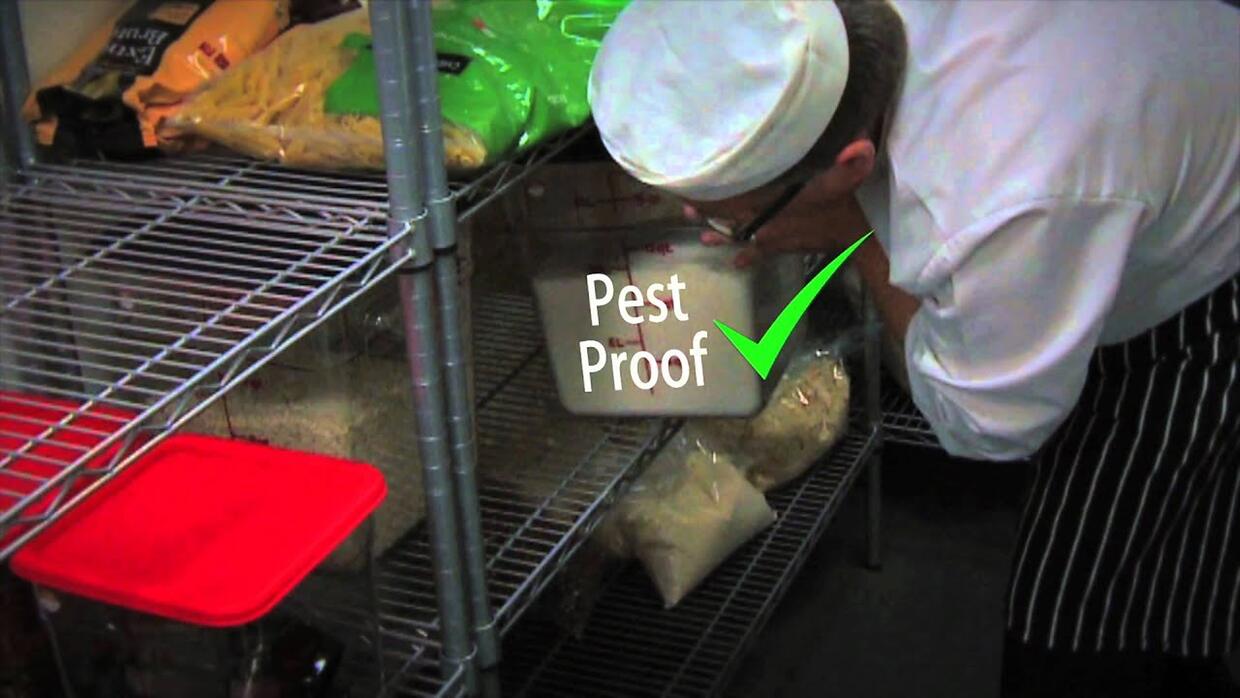
Video: Food safety coaching: pest control, from Food Standards Agency.
How a commercial program runs
Sealing the shell is the spine of the program; trapping, stations, verification and the log hang off it.
-
Free site inspection
Whoever attends walks the sea wall, the enclosures, the dock doors, the roof deck and the plenums, and maps every opening, burrow and dropping run for the manager.
-
Exclusion on the shell
Common-element openings a quarter inch or larger are closed with metal bird stops, hardware cloth, sheet metal and door seals, each recorded with its material.
-
Trapping and stations
Snap traps go into plenums and chases and stay at least a week; exterior tamper-resistant stations are placed under license where burrows call for them.
-
Verification and reporting
A return visit checks for fresh sign in the units or tenant spaces that complained, and the manager receives a dated report with the map.
-
Ongoing service if wanted
Monitoring visits, station checks and log updates are quoted as their own line with their own terms, so the board approves them separately.
Why Fort Lauderdale managers and boards route rodent work through us
A commercial program has to survive an inspection, a board meeting and a resident complaint.
A record a board or an inspector can read
Every visit produces a dated log, a numbered site map and a list of sealed openings with materials, written so a health inspector, a board packet or an adjuster can use it without a phone call. Findings are placed relative to the unit and the common elements, which is what a condo board needs to assign cost. The contractor we route shows a sample log at the inspection, and a manager who wants a clearance letter for a unit dispute or a turnover gets it from the same records.
Site map, service log and FDACS license number on every report
The shell sealed before the stations go out
A bait-station contract on a building with an open tile eave or a torn dock door seal is a standing order for the same complaints. On every program we route, the common-element openings are measured to a quarter inch and closed with metal first, and trapping or licensed stations follow. UF/IFAS gives a quarter inch as the rat-proofing standard and notes that trapping avoids a poisoned rat dying inside the structure, which in a tower means inside a resident's ceiling.
UF/IFAS: a quarter inch is the rat-proofing standard
The right FDACS license for the program
Rodenticide for hire in Florida requires an FDACS pest control business license with a certified operator in General Household Pest and Rodent Control, and trapping in a structure requires at minimum a Limited Commercial Wildlife Management certificate. Every contractor we route holds the credential the program needs, second-generation anticoagulants go only into tamper-resistant stations as the EPA requires, and the license number sits on the proposal for the manager to check with FDACS before the first visit.
FDACS pest control business license with a certified operator, verifiable in the FDACS lookup
What Reddit Says About Commercial Rodent Control in Fort Lauderdale
The r/pestcontrol and r/homeowners threads are written mostly by homeowners, and the vetting habits they describe transfer straight to a manager or a board. People collect several bids for identical scope, refuse to judge a single bundled number, and ask on the first call whether the company does the sealing or only the trapping. The strongest preference is for a local operator over a national brand, and an itemized proposal that separates pest control, exclusion and cleanup is treated as the mark of a company worth hiring.
The red flags are the same ones that sink a commercial contract. A poison-only plan with no sealing is the top complaint, and the line about poison sending rats outside to drink is read as dishonesty. Long monitoring contracts folded into a removal price draw anger, with one thread describing a monthly fee plus a bimonthly charge that nobody had explained. Companies that return for months with no change in results, and companies that seal with animals still inside or trap with nothing sealed, come up again and again.
The questions people tell each other to ask are a board checklist: what is included and what is a separate line item, whether the exclusion is warrantied and for how long, whether the warranty renews, whether the company cleans and decontaminates or only traps, how many follow-up visits are included, and what happens if the animals come back. Quotes for similar work spanning under two thousand dollars to tens of thousands leave people asking whether they are being cheated, which is exactly the question a board asks of a proposal.
The Florida threads add the local material: palm fronds and limbs as the route onto a roof, barrel tile eaves and soffit gaps as the entry, tree collars on tall palms, and a post-Irma infestation as the storm connection. Residents describe sleep loss and being told they are dramatic, which is what a manager hears from a unit before the source is found. Every contractor we route is expected to answer the checklist in writing before a program starts.
A typical commercial rodent call from a Coral Ridge condo board
The situation: A manager for a mid-century garden-style condo on a Coral Ridge canal gets complaints from three second-floor units on the same wing about running in the ceiling after midnight. One owner has moved to the sofa. The board's first instinct is to bill the loudest complainant, and a handyman has already foamed a gap in one unit's soffit.
What gets done: Whoever attends walks the sea wall and finds no burrows, then walks the roofline and finds the barrel tile eave along the canal side missing its bird stop for most of its length, with the foam plug in the soffit already chewed through. A queen palm leans on the roof at the corner. Roof rat droppings, a quarter to half inch and pointed at the ends, run the shared plenum above all three units. The proposal separates a metal bird stop for the full eave, hardware cloth at the soffit returns, trapping in the plenum for at least a week, a verification visit and an optional monitoring line, and it places every finding in the common elements.
How it turns out: The board approves the sealing and the trapping as association cost and declines the monitoring for now. The traps take several adults, the verification visit finds no fresh sign, the palm gets cut back by the landscape contractor, and the manager attaches the report and the site map to the next board packet. The three owners get a copy, and the one on the sofa goes back to bed.
Commercial rodent questions from Fort Lauderdale managers and owners
These come up in board meetings, tenant calls and health inspections.
Buildings and boards
Who pays when rats show up in a condo unit, the owner or the association?
The location of the entry point usually decides it, and the report is written to show that location. Rats entering through a tile eave, a roof deck joint, a mechanical louver or a party wall are using common elements, which most declarations put on the association. A gap around one unit's own AC line set or a torn screen on a unit's balcony is usually the owner's. The contractor we route places every finding and every sealed opening relative to the unit boundary so the board can decide from the document instead of from the loudest complaint.
Can the program run without residents seeing traps or bait?
Yes, because the work happens in the common structure. Traps sit in plenums, chases, mechanical rooms and roof spaces, and exterior stations sit in tamper-resistant boxes along sea walls and enclosures where the EPA rules require them for second-generation anticoagulants. Nothing goes into a unit unless the owner asks. UF/IFAS notes that trapping avoids the risk of a poisoned animal dying inside the structure, which is why trapping is the default inside a building and stations are reserved for exterior burrow pressure under an FDACS pest control business license.
How long does a building program take to work?
A building with the shell sealed usually goes quiet within weeks, while a large site with burrows and several open roof runs can take one to two months, which matches HomeGuide's timeline of two to three days for a light problem and one to two months for a severe one. Roof rats are wary of anything new in their territory, which is why UF/IFAS says to leave traps in place for at least a week. The programs that drag on for months are the ones with stations serviced and nothing sealed; ask on the first visit what will be closed and when.
Restaurants, marinas and warehouses
Will the service log satisfy a health inspection?
The log is written for exactly that reading. It records the FDACS license number of the business, each visit with date and findings, the numbered location of every station and trap on a site map, the openings sealed with their material, and the actions taken. For a restaurant the log stays at the site; for a marina or a warehouse it goes to the operator after each visit. Ask to see a sample log before the program starts, and ask how quickly a finding in the kitchen gets reported to the manager.
Why do we keep getting rats near the dumpster and the sea wall?
Those are Norway rat sites, and a Norway rat burrows and feeds at grade, so a dumpster enclosure with a broken gate sweep and a sea wall with soil behind it are both food and shelter. Closing the enclosure, moving the grease bin off the soil, sealing the base of the pad and running licensed exterior stations along the burrow line is the fix at grade. The roofline still gets sealed in the same program, because the roof rat is using the parapet above while the Norway rat is using the ground below.
Do we need a monthly contract?
A monthly contract is a separate decision from the sealing and the initial trapping, and it should be quoted as its own line with its own cancellation terms. A restaurant with a health-inspection log requirement or a marina with standing burrow pressure often keeps a monitoring schedule. A condo tower with the shell sealed may need only a verification visit and a call if activity returns. Homeowner threads are full of monitoring fees that were folded into a removal price and never explained; ask for the two numbers apart.
Still have a question? Call (954) 790-6402 and ask.

Book a free site inspection for a Fort Lauderdale property
Call (954) 790-6402 or send the form with the property address and the units or tenants affected. Someone answers around the clock and the inspection is free.