Rodent Removal in Fort Lauderdale, FL
Roof rats run the sea walls, the palms and the tile eaves of Broward County, and the scratching starts after dark. Licensed contractors trap them out, close the roofline, and put the attic right.
What we arrange across Fort Lauderdale
Nine services in three groups that follow the order a job runs: the animals come out, the house gets closed, and whatever they left in the attic gets dealt with.
Roof Rat Removal
Trapping out the roof rat that runs the sea walls and rooflines of Broward, sequenced with sealing.
About roof rat removalGetting them out
Trapping and carcass work, for houses and for the commercial blocks along the port and the rail lines.
Closing the house
The sealing, inspection and paperwork that stop the next infestation before it starts.
Putting the attic right
Cleanup and new insulation once the attic is empty and closed.
What is making the noise
A handful of animals account for nearly every call from Fort Lauderdale, and the time of night you hear them narrows it before anyone visits.
-
Roof rats
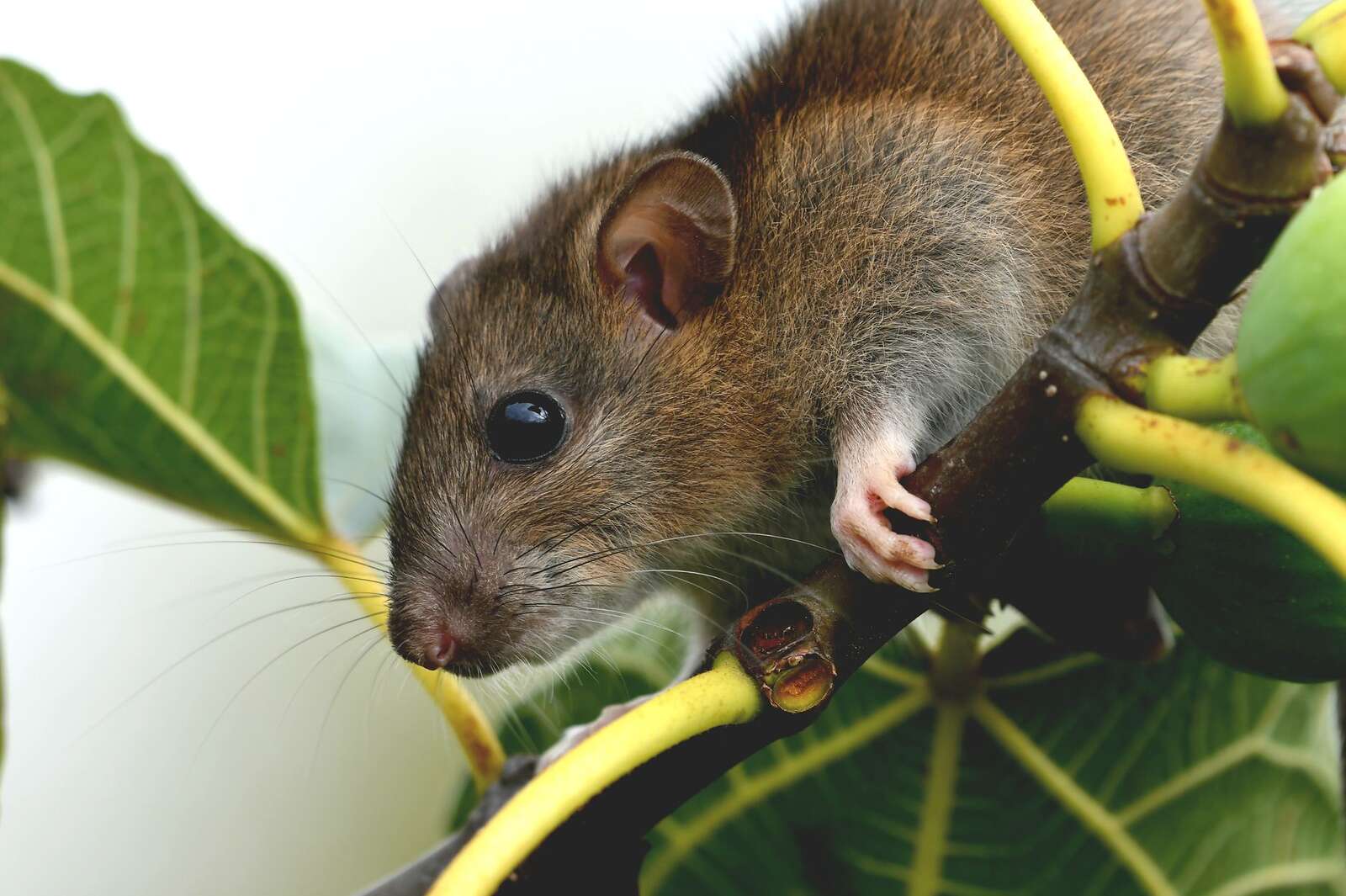
The rodent behind most Broward attic calls. UF/IFAS calls the roof rat the worst and most abundant rodent pest in Florida and notes that it breeds year-round here, so there is no off-season. It climbs: palm trunks, hedges, dock lines and wires deliver it to the eave, and it enters at the roof.
-
Norway rats
A heavier, ground-level rat that burrows behind sea walls, under slabs and around dumpster enclosures at marinas, older commercial blocks and waterfront property. UF/IFAS gives half an inch as the opening a rat needs and a quarter inch as the size rat-proofing has to close.
-
House mice
A minority of Fort Lauderdale calls. Droppings shorter than a quarter inch and noise inside cabinets or appliance voids point to mice; a roof rat leaves droppings a quarter to half an inch long, banana shaped with pointed ends, according to UF/IFAS.
-
Squirrels
Footfalls in daylight, heaviest at first light and dusk, usually mean a squirrel in the attic. The openings overlap with the rat entries, so a sealed roofline handles both, and the calls we route for squirrels are a small share of the total.
-
Something that died in a wall
A sweet, heavy smell that builds over a week or two is a carcass, most often after a poison-only plan. The EPA describes most rodenticides as anticoagulants that kill four days to two weeks after feeding begins, and the animal dies wherever it nests.
-
The rear of a canal lot
On canal and Intracoastal lots the first evidence is often along the sea wall cap, the dock line and the hedge, the side of the property most owners never inspect. Most waterfront inspections we route start at the back of the lot for that reason.
Why a Fort Lauderdale rodent job starts at the eave and the sea wall
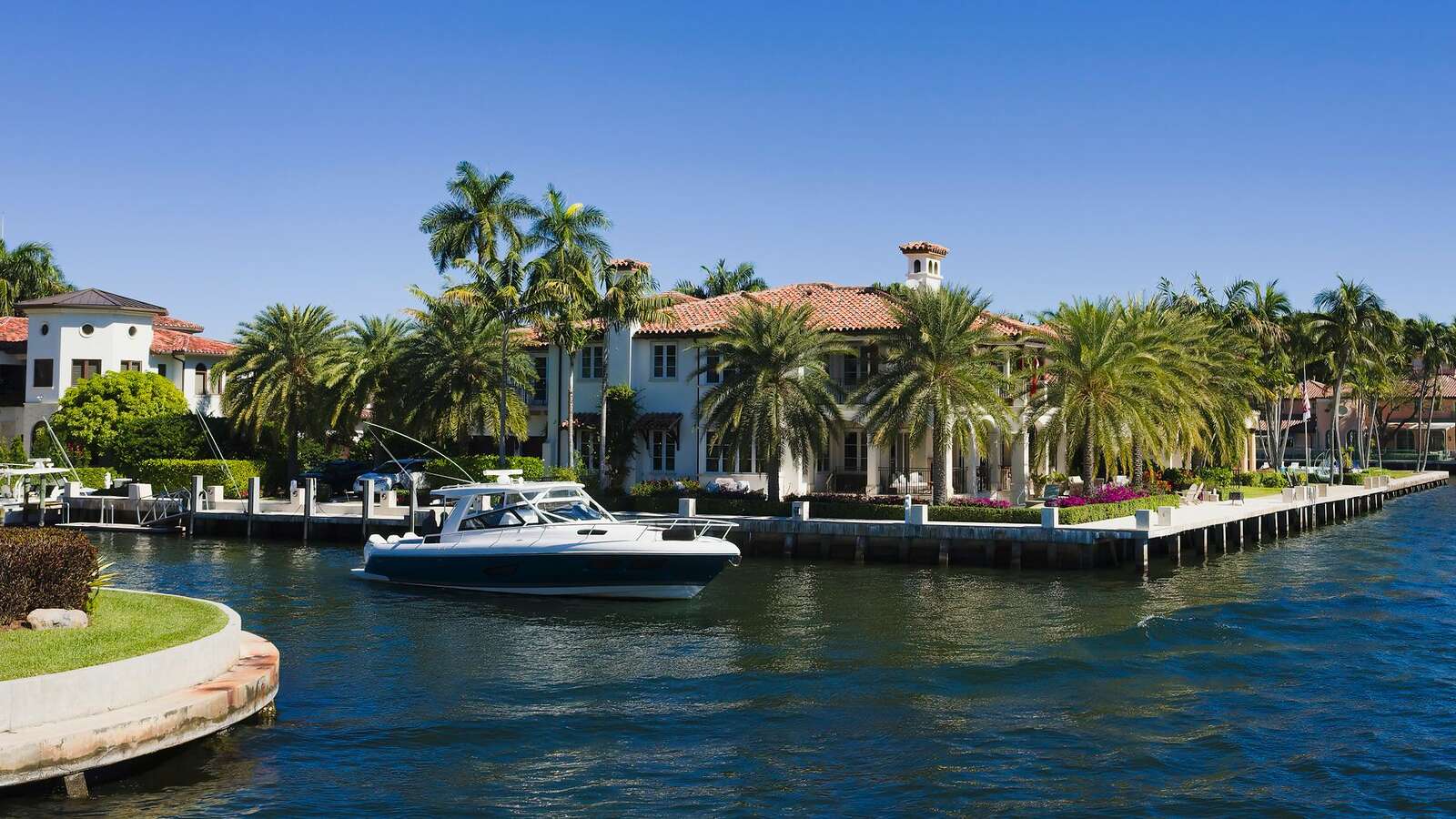
Broward houses sit on slabs with vented attics, so the way in is above head height, and on a canal lot the way to the roof is along the water. Fort Lauderdale counts about 165 miles of navigable inland waterways, and every one of those lots has a sea wall, a dock line and usually a hedge or a row of palms at the rear, the side of the property nobody walks with a flashlight. Roof rats travel that edge, climb from the dock or the hedge to the eave, and go in where the roofline is open.
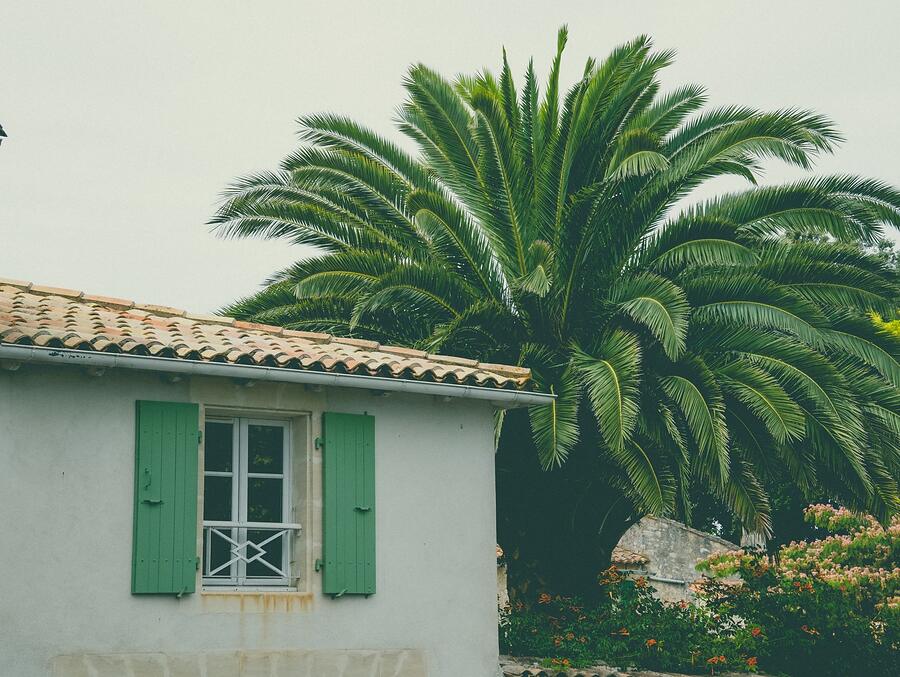
The roofline is open in a predictable place. Barrel tile is the common roof in Broward, and the first course of tile at the eave has a half-round gap under every tile that runs the full length of the eave. The part that closes it is a bird stop, also called an eave closure: a code-approved metal profile, typically 26 gauge galvanized or aluminum, sometimes ventilated with weep holes. Bird stopping on a tile roof appears on the Department of Energy list of recommended measures for that roof type. When the bird stop is missing, corroded or knocked loose by a storm, a rat-sized void runs the length of the eave, and a blob of expanding foam in that gap is what a cheap quote usually means.
The pressure never lets up. Winters here stay warm enough that UF/IFAS describes roof rats breeding year-round, the June to November rains push animals indoors, and the cool snaps between November and February are when attic activity becomes audible and the calls peak. Mango, avocado, citrus and sapodilla trees keep them fed, and palm fronds or limbs within about six feet of the roofline give them the bridge.
Why Fort Lauderdale homeowners route the call through us
Three things separate a job that ends from a job that drags through the winter.
The eave gets closed with the right part
Most Broward houses carry barrel tile, and the gap under the first course runs the whole length of the eave. It is closed by a manufactured bird stop, a code-approved metal closure the Department of Energy lists among its tile-roof measures. A cheap quote means foam in that gap. Contractors we route fit the metal closure, screen the vents and soffits in steel, and seal every opening to the quarter-inch standard.
Quarter inch is the rat-proofing standard, UF/IFAS
Price bands printed before the visit
No competitor on the Fort Lauderdale search results publishes a number. The national bands from HomeGuide 2026 sit on every service page here, and the free inspection turns them into a quote with trapping, sealing and cleanup on separate lines. A single bundled figure is the thing homeowners say online they could never judge, and it is where a monitoring contract hides.
Full-home exclusion $500 to $2,500 nationally, HomeGuide 2026
An FDACS license you can look up first
Florida regulates this work through FDACS. Trapping rats or mice in or under a structure for hire needs at minimum a Limited Commercial Wildlife Management certificate, and any rodenticide use needs a pest control business license with a certified operator. Contractors we route hold the credential their job requires, and the FDACS lookup lets you check the number before a ladder touches the eave.
FDACS Chapter 482 licensing, State of Florida
Book the free inspection tonight
Someone picks up this line at any hour. Say what you hear, where in the house, and whether the lot backs onto a canal, and the nearest licensed contractor is lined up for a free roofline and attic inspection with an itemized quote.
The figures that decide how the job goes
Sourced numbers, because the size of a gap and the reach of a roof rat are what make trapping alone fail.
- 1/4 in The opening size a rat-proofing job has to close UF/IFAS Extension
- 150 yd How far a roof rat ranges from its nest UF/IFAS Extension
- 4 to 14 days How long an anticoagulant bait takes to kill US Environmental Protection Agency
- $500 to $2,500 National band for full-home exclusion sealing HomeGuide 2026
A common call from a canal-front street
The situation: A 1960s single-story house on a finger canal south of the New River, barrel tile over block, a dock and a boat lift at the rear. Running in the ceiling over the main bedroom every night since the first cool snap, a half-eaten mango found under the tree, and a homeowner who has stopped sleeping and been told by friends that it is probably nothing.
What gets done: The inspection walks the sea wall and dock line first and finds rub marks along the hedge and the boat lift cable, then finds the bird stop missing along the rear eave and a torn soffit screen at the corner nearest the dock. Both are recorded. The soffit is screened in steel that day, traps go into the attic runs, and the rear eave gets its metal closure once the traps go quiet.
How it turns out: Two visits over about three weeks, an itemized quote with trapping and sealing on separate lines, and a recommendation to cut the hedge back off the fascia. The noise stops in the first week and does not return.
Mice, squirrels, or something else
How the signs differ between the two.
Video: Signs of Mice vs. Squirrels In Your Attic, from Skedaddle Humane Wildlife Control.
How a rodent job runs in Fort Lauderdale
The same sequence on every call, with exclusion as the spine, because sealing a house full of rats and trapping a house with an open eave both fail.
-
Call and describe it
Where the noise is, what time of night, how long it has run, and whether the lot backs onto water. That narrows the species before anyone drives out.
-
Free inspection
Roofline from a ladder, attic with a light, exterior and dock line walked and photographed, every opening listed, and an itemized quote written.
-
Seal the unused openings
A metal bird stop along the tile eave, steel mesh at soffits and vents, mortar at penetrations, leaving only the runs currently in use.
-
Trap what is still inside
Snap traps on the active runs, left at least a week because roof rats avoid new objects, checked and reset until the attic goes quiet.
-
Close the last runs and restore
The final openings are sealed once activity stops, and the attic is cleaned or re-insulated where the damage calls for it.
Which service fits the call
Most jobs use two or three of these in sequence. Each carries a national figure so you can budget before the inspection.
-
Roof rat removal
Trapping on the active runs, sequenced with sealing. HomeGuide 2026 puts trapping and removal between $250 and $1,200 nationally. Roof rat removal.
-
Rodent exclusion
The tile eave closed with a metal bird stop, then soffits, vents and penetrations to the quarter-inch standard. Full-home sealing runs $500 to $2,500 nationally. Rodent exclusion.
-
Rodent inspection
Free here; the national guides put a standalone inspection at $0 to $175, and homeowners online describe paying around $75 just to get a bid. Rodent inspection.
-
Attic cleanup
Droppings, urine-soaked insulation and nests removed from a hot vented attic, then sanitized. Cleanup and decontamination run $600 to $2,500 nationally per HomeGuide. Attic cleanup.
-
Insulation replacement
Removal and replacement at $2.50 to $5.50 per square foot nationally. The Department of Energy notes that compressed insulation does not deliver its rated R-value and wet insulation performs poorly. Insulation replacement.
-
Dead rodent removal
Finding and removing a carcass from a wall, ceiling or attic, then closing the opening it used. HomeGuide puts it at $150 to $500 nationally. Dead rodent removal.
-
Clearance letters
A written inspection report for a closing, a lease, a condo board or an insurance file, priced as the inspection plus any sealing found necessary. Rodent clearance letters.
-
Post-storm inspection
A roofline and harborage check after a hurricane or a flood, when lifted tiles and debris piles open new routes, timed before the winter attic noise. Post-storm rodent inspection.
Where the contractors are dispatched
Fort Lauderdale and the rest of Broward County. The neighborhoods and towns below have their own pages because the housing, the water and the canopy change what a job looks like.
Questions Fort Lauderdale homeowners ask first
Straight answers to what comes up on nearly every call.
What is up there and how long it takes
How long does it usually take to get rid of rats?
Longer than most quotes admit. The HomeGuide figures are two to three days of trapping for a few animals and one to two months for a heavy infestation. Sealing is what shortens it, because once the eave and the vents are closed the trapping has an end. The stories online about four months with no result are nearly always trapping with nothing sealed.
Is it roof rats or mice?
In Fort Lauderdale it is roof rats far more often than mice. Noise after dark in the ceiling, droppings a quarter to half an inch long with pointed ends, and rub marks along the top plate are the roof rat pattern per UF/IFAS. Small droppings under a quarter inch with activity in kitchen cabinets suggest mice, while footfalls in daylight usually mean squirrels.
What keeps rats away permanently?
A closed building. Repellents, ultrasonic plugs and bait do nothing about the opening, and a roof rat ranges about 150 yards from its nest, so a neighbor's mango tree or the sea wall two lots down keeps the pressure on as long as the eave is open. A metal bird stop along the tile eave, steel mesh at the soffit returns and vents, and mortar at the pipe penetrations are what hold.
Paying for it and checking who comes
What is the cheapest way to get rid of rats?
Sealing plus snap traps, done once. HomeGuide 2026 puts trapping and removal at $250 to $1,200 nationally and full-home exclusion at $500 to $2,500. A bait-only plan looks cheaper and usually produces a dead animal in a wall plus a second visit, which is how the bill grows. Slab-built Broward houses have no basement or crawl space to price, so a local quote often lands under the national spread.
Should I just put poison in the attic?
The idea that poison makes a rat go outside to find water is folklore. The EPA describes most rodenticides as anticoagulants that kill four days to two weeks after feeding begins, and a rat nesting over your bedroom dies over your bedroom. UF/IFAS notes that trapping greatly reduces the chance of a poisoned rat dying inside the building. Second-generation baits are also restricted to tamper-resistant stations in residential settings.
Who turns up, and are they licensed?
An independent Broward contractor who holds the FDACS credential the job requires. At minimum, a Limited Commercial Wildlife Management certificate from FDACS is what a paid trapper needs to work inside a structure, and rodenticide work moves the requirement up to a pest control business license with a certified operator. Get the license number and run it through the FDACS lookup before anyone starts.
Still have a question? Call (954) 790-6402 and ask.
Hearing it tonight?
One call gets the nearest licensed contractor booked for a free inspection, or leave a name and number and the call comes back to you.