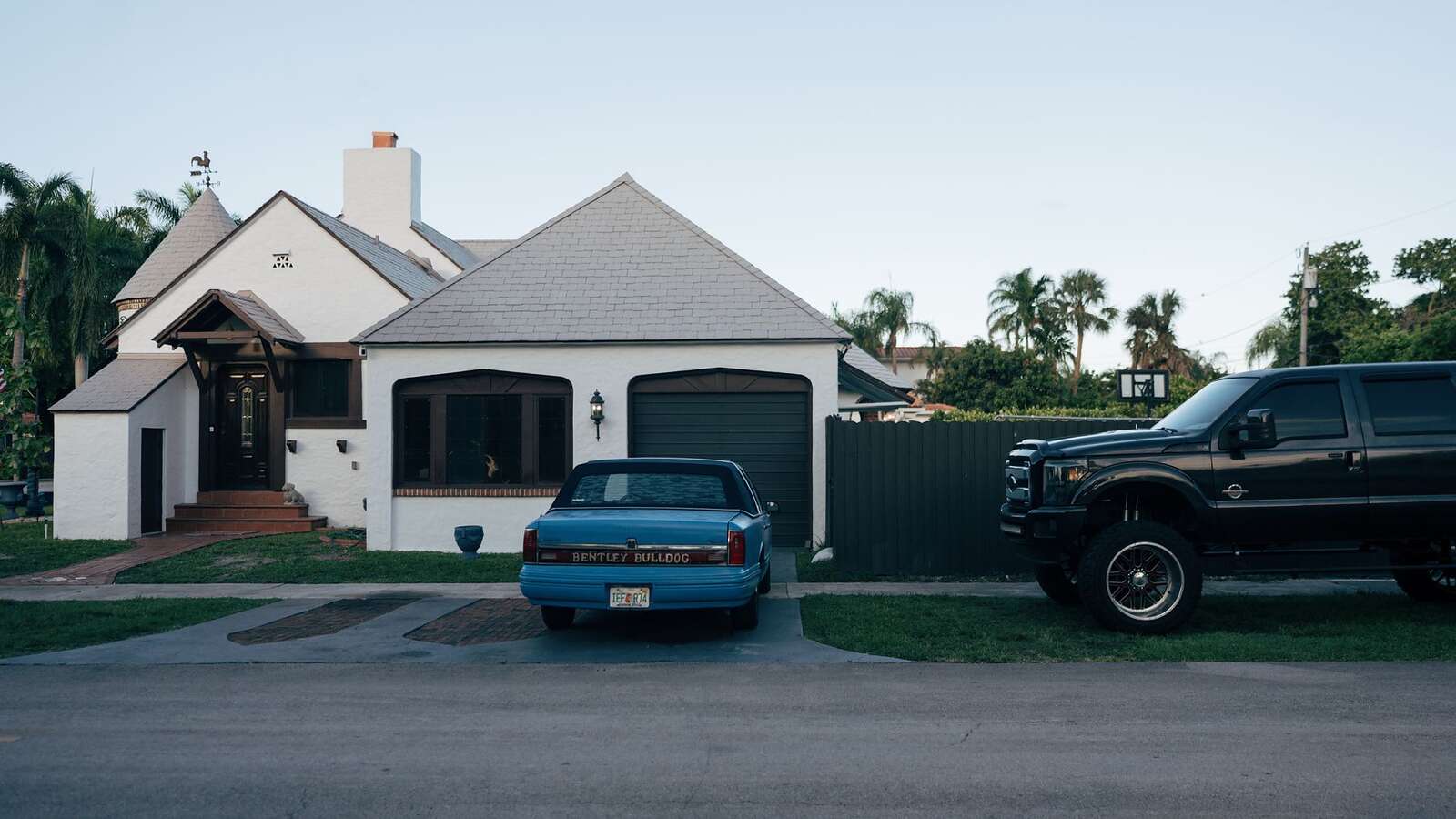
Rodent Removal in Coral Ridge
Coral Ridge attics were framed in the 1950s and 1960s, and sixty years of soffit, vent screen and tile is what a roof rat tests first. Every job we route starts with the roofline.
Mid-century attics east of Federal Highway
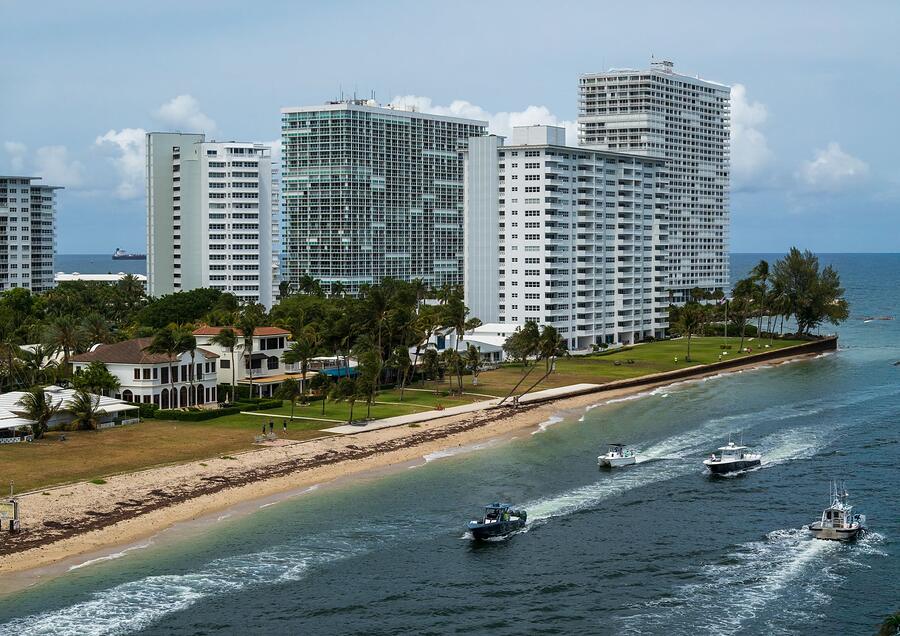
Coral Ridge is a post-war neighborhood, and its rodent problems are mid-century problems. The area lies east of Federal Highway between Sunrise Boulevard and Oakland Park Boulevard, reaching from the Middle River to the Intracoastal, and its civic association dates from 1949. The single-family blocks filled in through the 1950s and 1960s, with duplexes, town houses and condo buildings mixed in along the water and the main roads.
A house framed in 1958 has a vented attic with the original soffit and gable screens, and the mesh in those screens was light aluminum or plastic that has had six decades of salt air to work on. Off-ridge vents and turbine vents from later updates sit on plastic bases. Flat-roof additions meet the original pitched roof at a seam that was never designed to be rodent-proof. On the tile roofs, the eave closure has often gone the way of the vent screens.
Coral Ridge attics also tend to hold older blown-in or batt insulation that has been in place through more than one rodent generation. Once the animals are out, that insulation is checked; the Department of Energy notes that compressed insulation does not deliver its rated R-value and wet insulation performs poorly, and rodent-tunneled attic insulation is both. Attic insulation replacement is quoted as its own line after the sealing is done.
Canal fingers and the country club canopy
Two landscapes feed rodents into Coral Ridge attics: the canal fingers running off the Intracoastal and the golf course at the center of the neighborhood. The canal blocks put a sea wall and a dock at the rear of each lot, where roof rats run the wall cap and the dock stringers and Norway rats dig in behind the wall. The blocks around the country club, laid out in the 1950s, carry a mature canopy of oaks, mahoganies, ficus and tall palms that has grown over rooflines on both sides of the fairways.
UF/IFAS describes roof rats as arboreal animals that move along branches, wires and palm trunks and range about 150 yards from the den. A fairway edge lined with royal palms, a canal bank with sea grape and a backyard with a mango tree are all inside that circle in Coral Ridge. Any limb or frond within roughly six feet of the eave is the route onto the roof.
- Royal, queen and coconut palms with skirts of dead fronds at roof height
- Ficus hedges grown into the eave along side yards
- Mango, avocado and citrus dropping fruit through the summer and fall
- Sea walls, dock boxes and covered lifts along the canal fingers
- Cable and service drops from the pole to the fascia
The roof rat removal page covers the species and the trapping; rodent exclusion covers the sealing, which on a Coral Ridge house is the larger part of the job.
Condo and town house buildings in Coral Ridge
A meaningful share of Coral Ridge housing is in condo and town house buildings, and rodent work there is a board and manager decision rather than a single owner's call. Low-rise mid-century condo buildings along the Intracoastal and the main roads share attics, soffit runs and utility chases across units, so a rat heard in one ceiling has usually come through a common opening that one owner cannot seal alone.
The inspection on a multi-unit building covers the full roofline, the trash enclosure, the dock and sea wall if the building has them, and the ground-level penetrations where Norway rats enter. The quote is written so a board can read it: exclusion for the whole envelope on one line, trapping by unit or by common area on another, and cleanup separately. Property managers and association boards are covered on the commercial rodent control page, and questions before a board meeting can go through the contact page.
What a mid-century roofline check turns up
A Coral Ridge inspection spends its time at the vents, because 1950s and 1960s attics breathe through soffit screens, gable louvers and off-ridge vents that have all aged at the same rate. From the ladder, whoever attends checks each screen for tears and corrosion, each vent base for gaps, the seam where any flat-roof addition meets the original pitch, and the first course of tile for a missing eave closure. The attic walk then follows the droppings back to whichever of those openings is in use.
Why mice keep coming back
A look at the openings that make it repeat.
Video: EASY WAY to Get Rid of Mice in Your House FOREVER, from Silver Cymbal.
Why Coral Ridge homeowners and boards call this line
Sixty-year-old attics need sealing done right, quoted in lines, by a contractor whose FDACS license you can look up.
Every vent and eave is closed before trapping starts
A mid-century Coral Ridge house has more roofline openings than it has rooms, so the contractor we route measures every soffit screen, gable louver, vent base and tile course against the quarter-inch standard before a trap is set. Openings are closed with galvanized hardware cloth, sheet metal and fitted metal eave closures, and the trapping then runs inside a sealed attic until it stays silent. Trapping into an open attic is the most criticized practice in homeowner forums, and it is avoided on every routed job.
UF/IFAS: rat-proofing is measured against a quarter-inch opening
Free inspection and a quote a board can read
The inspection costs nothing, whether the property is a single-family house on a finger canal or a twelve-unit building on the Intracoastal, and the quote lists exclusion, trapping, cleanup and follow-up as separate items. National cost guides put attic cleanup and decontamination between $600 and $2,500 and trapping and removal between $250 and $1,200; those are typical-job bands, confirmed at the inspection, and a slab-built Florida house with no crawl space tends to land under the national assumption for the same scope.
HomeGuide 2026: attic cleanup and decontamination $600 to $2,500 nationally
FDACS-credentialed contractors on every job
Trapping rats or mice in, on or under a structure for hire in Florida requires at minimum an FDACS Limited Commercial Wildlife Management certificate, and using rodenticide requires a pest control business license with a certified operator. Every contractor we route holds the credential the work calls for, and the license number can be checked with FDACS before anyone is let onto the roof or into a common attic. Second-generation anticoagulant baits, where used at all, go only in tamper-resistant stations under EPA rules.
FDACS Limited Commercial Wildlife Management certificate, verifiable through the state lookup
A common Coral Ridge call: the 1961 house by the fairway
The situation: A couple in a 1961 single-story house backing onto the golf course notice their dog staring at the ceiling in the kitchen every evening in early December. Then comes the sound: a quick run across the ceiling toward the garage around ten each night. A row of royal palms along the fairway edge drops fronds onto the roof, and the gable vent on the garage end still has its original louver with a plastic screen behind it. She has stopped sleeping past three; he has been told by a coworker that it is probably a lizard.
What gets done: Whoever attends finds the plastic gable screen chewed open at the bottom corner, a soffit panel above the garage door pushed up where a frond has been resting on it, and an off-ridge vent with a cracked base. Droppings a quarter to half an inch long with pointed ends run along the top plate from the gable toward the kitchen. The gable gets galvanized hardware cloth behind a new louver, the soffit panel is refastened and screened, the vent base is flashed, the palm skirts are noted for trimming, and snap traps stay on the run for a full week before anyone judges them.
How it turns out: Two adults and three juveniles come out over twelve days, then the traps stay empty and the dog stops watching the ceiling. The return visit finds no fresh droppings, the couple has the list of the three openings that were closed, and the insulation over the kitchen, tunneled and flattened, is quoted separately for replacement once the attic has stayed quiet a month.
Coral Ridge rodent questions
What owners of mid-century houses and condo boards along the Intracoastal ask first.
Older attics
Should the old insulation come out after the rats are gone?
Often yes, and the decision is made after the attic has been sealed and quiet, on the basis of what the inspection found. Insulation that rats have tunneled through is flattened, and the Department of Energy states that compressed insulation does not deliver its rated R-value; insulation soaked with urine holds odor and performs poorly. In a hot, vented Coral Ridge attic that odor is worse. Removal and replacement is quoted as its own line, and national guides price it by the square foot, so ask for the area figure on the quote.
Is it a rat or a squirrel or a lizard in my ceiling?
Timing and droppings settle it. Roof rats move after dark and leave droppings a quarter to half an inch long, curved and pointed at both ends, according to UF/IFAS. Squirrels are loudest in early morning and daylight. Lizards and geckos in a South Florida attic are silent to the ear and leave nothing you would notice from below. A quick run across the ceiling at ten at night in a 1960s house with original vent screens is a roof rat until the inspection proves otherwise, and the free inspection is how it gets proved.
Condos and canals
I am in a condo. Who is responsible for getting the rats out?
The association is usually responsible for the roof, the common attic and the building envelope, and the owner for the inside of the unit, but the governing documents decide the line. In a mid-century Coral Ridge building the openings are almost always in common elements, so the sealing is the board's job even when the noise is in one ceiling. Bring the inspection findings to the manager; the quote is written so the board can see exclusion, trapping and cleanup as separate items and vote on them.
Does living on a canal mean the rats will always come back?
No. The canal supplies the route and the roofline supplies the opening, and a closed roofline stays closed. Roof rats will keep running the sea wall and the dock stringers, because that is what the animals do, but a fitted metal eave closure, screened vents and flashed penetrations give them nowhere to go from there. The canal-side habits that help are small: food off the boat, a latched dock box, a shore cord kept off the fascia, and hedges cut back from the eave. Ask whoever attends about the warranty terms on the sealing and what triggers a return visit.
Still have a question? Call (954) 790-6402 and ask.

Book a free inspection in Coral Ridge
Call (954) 790-6402 or send the form. Someone answers around the clock, and the inspection is free for houses and buildings alike.