
Rodent Removal on the Las Olas Isles
The finger islands off Las Olas Boulevard pair the city's oldest dredged canals with tile roofs, thick hedges and a steady turnover of teardowns, and each of those moves rats. Licensed contractors handle every job we route.
What makes the Las Olas Isles different for rodent work
The Las Olas Isles are dredged land with water on two sides of nearly every lot, and that geometry sets the rodent problem apart from anywhere inland. The homeowners association's history records that the isles were cut in the 1920s by finger islanding, a technique borrowed from Venice, with luxury waterfront houses following in the 1930s and bridges and other infrastructure in the 1950s. Every street ends at the water, and every lot ends at a sea wall.
Three conditions do the work here. First, the sea wall and dock line run the full length of each island without a break, so a roof rat has an unbroken route from one end of the isle to the other and a Norway rat has a mile of wall fill to burrow into. Second, the landscaping is dense by design: clipped ficus and clusia hedges for privacy, coconut, royal and date palms along the wall, and fruit trees in the older yards. A hedge against a wall is a covered runway and a palm skirt is a nest. Third, the roofs are barrel tile almost without exception, which puts an open eave course along every overhang.
The islands also carry two kinds of house at once. Older single-story homes from the mid-century sit next to new two- and three-story builds, and the older stock is being replaced one lot at a time. That churn matters for rodents, and it gets its own section below.
Tile eaves, hedges and palms on the isles
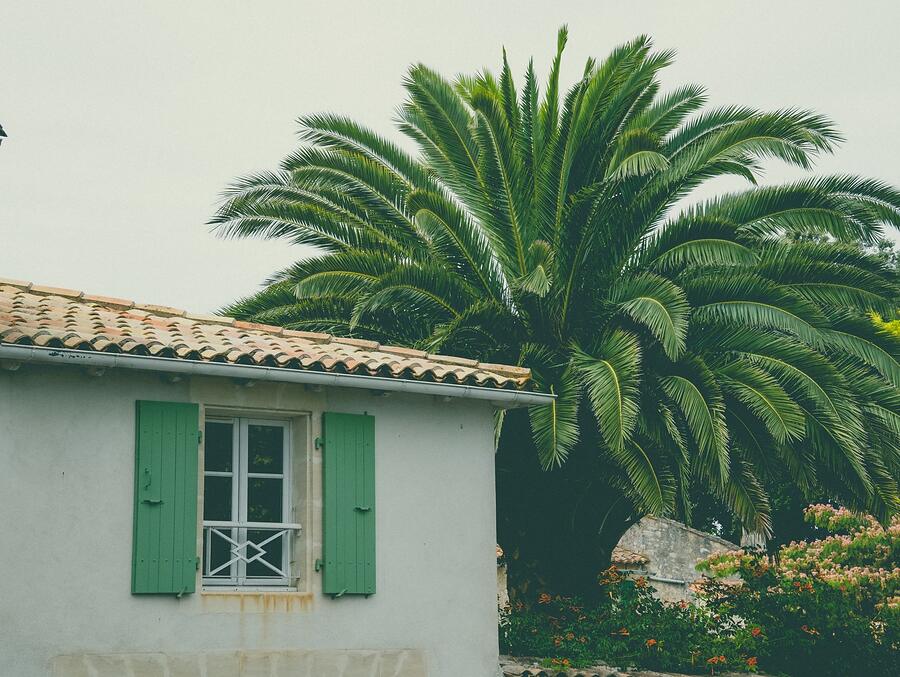
On a Las Olas Isles house the entry point is the tile eave far more often than anything else, and the hedge and the palms are how the animal reaches it. Barrel tile leaves a gap under the first course along the overhang, and that gap is meant to be closed by a bird stop, a named metal eave closure, usually 26 gauge galvanized or aluminum and sometimes ventilated. The Department of Energy lists bird stopping among its recommended measures for tile roofs. Where the closure was never fitted, or has rusted through in the salt air, the void runs the whole length of the eave and a roof rat walks in.
A cheap quote usually means expanding foam pushed into that gap. Foam is chewed out in a night. A fitted metal closure the full length of the eave is the repair, and it is why exclusion on a tile roof lands toward the top of the national band: the whole run has to be closed, along with the ridge ends and any off-ridge vents.
- The open eave course where the bird stop is missing, displaced or corroded
- Ridge and hip ends where the mortar or the closure has cracked away
- Soffit returns at corners, and soffit panels pushed up by a palm frond
- Gable and off-ridge vents with a plastic or light-wire screen
- The gap where a screened pool cage or a loggia roof meets the fascia
- Wall penetrations on the water side for dock power, lift controls and irrigation
Roof rats are arboreal, by UF/IFAS's description, and travel branches, wires and palm trunks, so any frond or limb within about six feet of the roofline is a bridge and a coconut palm leaning over the rear eave is a ladder. Sealing to a quarter inch, the UF/IFAS rat-proofing standard, is quoted as its own service under rodent exclusion, before or alongside the trapping described under roof rat removal.
Teardowns, king tides and the rats they move
Demolition next door is the most common reason a Las Olas Isles house that has been quiet for years gets rats. When an older house on the isles comes down for a new build, the colony in its attic, its hedge and its wall fill has to go somewhere, and the nearest older tile roof with an open eave is where it goes. The same happens in reverse when the new house is finished and its landscaping goes in: fresh hedges and palm plantings are new cover along the wall.
Water moves them too. The city's own king tide pages list the Las Olas Isles among the areas that see tidal flooding on the highest tides of the fall, and a sea wall that is overtopped floods the fill behind it. Burrowing animals leave and climb, and the attic is the high ground. Fort Lauderdale has also tightened its minimum sea wall height in recent years, so walls on the isles are being rebuilt lot by lot; a wall under construction is disturbed fill and open ground, and it deserves the same look as the roof. The CDC connects leptospirosis increases to floods and hurricanes, names rodents among the carriers, and advises rodent control as part of post-flood prevention.
None of this changes the sequence. Whoever attends seals the eave and the vents, traps what is inside, clears the dock and the hedge base, and comes back to confirm. On a house with a boat in the water, a post-storm rodent inspection after any named storm is worth the call. Every contractor we route holds the FDACS credential the job needs, and the license number can be checked with FDACS before work starts. Anything you want answered first goes through the contact page.
Working on a high-value waterfront house
A rodent job on an isles house has to protect finishes as carefully as it removes animals, and the quote should say how. Attic access on a large tile-roofed house is often through a closet ceiling or a garage hatch, cleanup involves hoses and bags moving through the house, and the roof walk is on tile that cracks underfoot when it is walked wrong. Ask whoever attends how the tile will be walked, how the interior will be protected, and whether the exclusion, the trapping, the cleanup and any insulation work are quoted as separate lines.
Insulation is the usual second decision. A colony that has been in a large attic through a summer leaves urine-soaked fill and droppings across the joists, and the Department of Energy notes that compressed insulation does not deliver its rated value and wet insulation performs poorly. Removal and replacement is priced nationally by the square foot, and on an isles-sized attic that line can be larger than the trapping. See attic insulation replacement for what the work involves and what to ask about it.
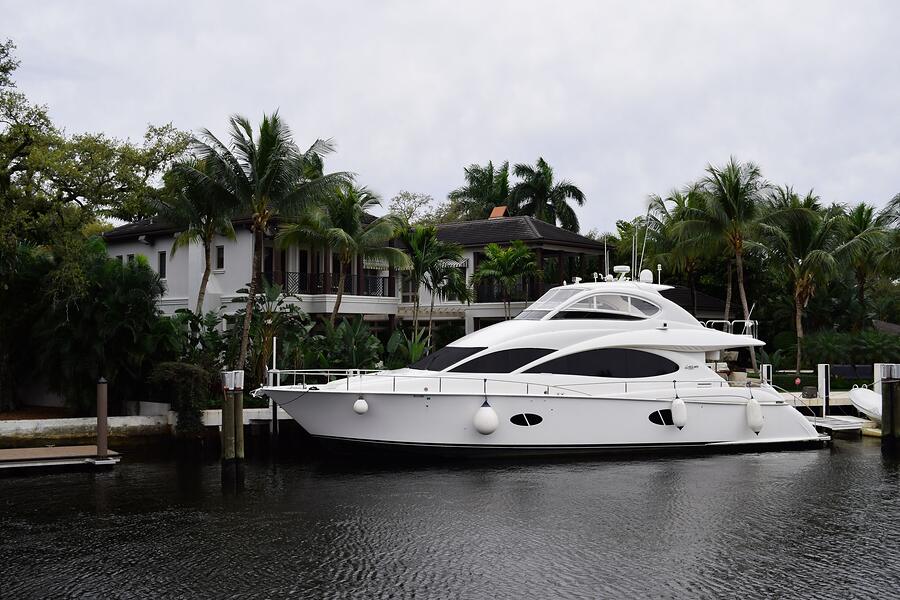
A representative Las Olas Isles rear eave
A barrel tile overhang above a clipped hedge, a coconut palm leaning in from the sea wall, and a dock and lift behind: the view whoever attends takes in from the rear of an isles lot before the ladder comes off the truck. The open eave course gets a fitted metal bird stop for its full length, the frond gets flagged for trimming, and the hedge base is checked for a burrow line. The image is representative of the setting and shows a typical lot on the finger islands.
What is moving inside the walls
How noise in a wall cavity gets traced.
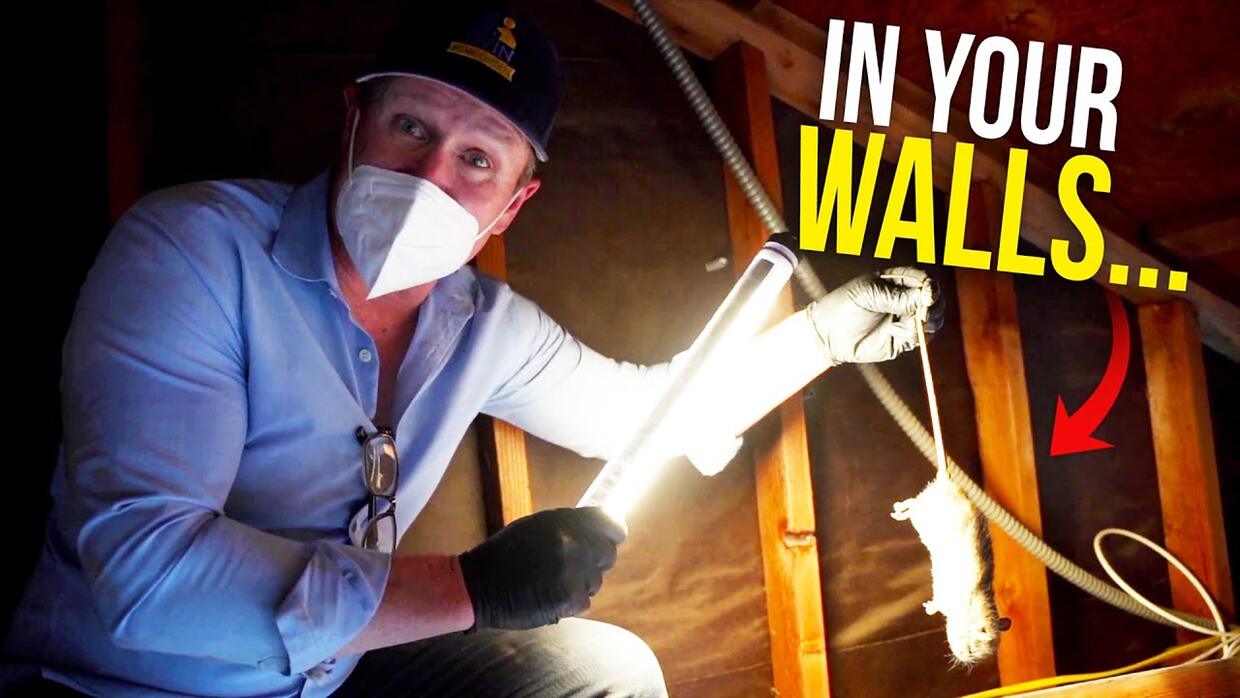
Video: Rodents in your walls? Here's what you do, from Twin Home Experts.
Why Las Olas Isles owners route rodent work through us
The routed contractors close the tile eave with a named component, work carefully inside a finished house and hold the FDACS credential.
A fitted bird stop, the full length of the eave
The open course under the first row of barrel tile is a recognized building gap with a code-approved metal closure, and that closure is what the contractor we route fits: galvanized or aluminum, the whole run, along with screened ridge ends and vents. Foam in that gap is chewed out in a night and is what a low quote on a tile roof usually means. You receive a written list of every foot closed and every vent screened, and the sealing goes on its own line of the quote.
US Department of Energy lists installing bird stopping among its recommended tile-roof measures
Trapping first, and the poison question answered
Trapping is the default in an isles attic, and whoever attends explains the alternative before using it. The EPA notes that most rodenticides are anticoagulants and that death comes four days to two weeks after feeding begins, which in practice means a carcass in a wall void or under the roof deck of a house that is hard to open. UF/IFAS makes the point that trapping reduces that risk. Where bait is ever used, it goes in a tamper-resistant station under label rules, and only a licensed operator may apply it.
EPA: rodenticide death typically 4 days to 2 weeks after feeding begins
The FDACS number, before anyone touches the tile
Trapping rats in, on or under a structure for hire in Florida takes at minimum an FDACS Limited Commercial Wildlife Management certificate, and any rodenticide work takes a pest control business license with a certified operator in General Household Pest and Rodent Control. FWC does not license rat trappers. Every contractor we route holds the FDACS credential the job needs, and on a house of this value it is worth the two minutes to look the number up with FDACS and ask for proof of insurance as well.
FDACS Limited Commercial Wildlife Management certificate, verifiable in the FDACS license lookup
A common call from an isles house beside a teardown
The situation: The owners of a mid-century single-story tile-roofed house on one of the isles have never had rats. The lot next door was cleared for a new build in the spring, the old house and its overgrown hedge came down in a week, and within a month there is a nightly run over the primary suite and a sour smell in the hall closet under the attic hatch. A tall ficus hedge along their own sea wall now backs onto an open construction site. One of them has started sleeping in the guest room at the far end of the house.
What gets done: Whoever attends finds the bird stop absent along the entire rear eave, with tile grit and droppings a quarter to half inch long piled on the top plate inside, rub marks along the sea wall cap on the construction side, and a shallow burrow at the base of the ficus. A fitted metal eave closure goes on the full rear and side runs, the ridge ends are closed, the soffit return at the pool cage is screened, the burrow is collapsed and filled, and snap traps go on the run for a full week. The quote lists exclusion, trapping, a return visit and an optional attic cleanup on separate lines.
How it turns out: The traps take several adults in the first ten days and go quiet as the construction next door moves to framing. The return visit finds no new droppings, the owners get a written record of every closure with photographs, and they book the attic cleanup and an insulation replacement for the primary suite side before the next cool snap. The hedge is thinned at the base so the wall cap can be seen.
Questions from Las Olas Isles owners
Tile roofs, dense landscaping and construction next door drive most of what these owners ask.
The roof and the yard
What is a bird stop and why does my quote mention it?
A bird stop is the metal closure that fits under the first course of barrel tile at the eave and closes the gap the tile profile leaves there. It is a code-approved building component, usually 26 gauge galvanized or aluminum and sometimes ventilated, and the Department of Energy lists fitting one among its tile-roof recommendations. When it is missing or has rusted through, the gap runs the full length of the overhang and a roof rat walks straight in. It appears on your quote because closing that run properly is the largest single piece of exclusion on an isles house, and because foam in the same gap fails within days.
Will the hedges and palms have to come out?
The hedges stay; they get thinned at the base and the palms get trimmed. The problem with a dense ficus or clusia hedge along the wall is cover for a runway and burrows nobody can see, so lifting the lowest foot or so opens the wall cap to view. Palm fronds and limbs get cut back to about six feet from the roofline, which is the clearance that removes the bridge. Dead frond skirts on the taller palms come down because they are nest sites. Fruit trees keep their fruit off the ground. Those are landscaping notes the routed contractor hands you along with the sealing list.
The job
The house next door is being demolished. Should I do something now?
Yes, book the inspection before the demolition rather than after the noise starts. A colony displaced from a teardown moves to the nearest open eave, and if your tile eave already has a fitted bird stop, screened vents and closed ridge ends, it moves past you. Exclusion done ahead of the demolition is the same work at the same price without the trapping, the cleanup or the lost sleep. The free inspection will tell you whether the eave is already closed and, if it is, the quote may be short.
How long does an isles house take to clear?
A light infestation with the eave closed clears in days; a heavy one in a large attic can take one to two months. HomeGuide gives two to three days for trapping a small number of animals and one to two months for a severe infestation. Roof rats are shy of new objects, so UF/IFAS's advice is to leave traps at least a week before moving them. The eave on a big tile roof is the longest single task on the job, and it is the task that makes the timeline hold, so ask about the warranty terms on it before work starts.
Still have a question? Call (954) 790-6402 and ask.
Book a free inspection on the Las Olas Isles
Call (954) 790-6402 or send the form. The phone is answered at any hour, and the inspection of the tile eave, the attic, the hedge line and the sea wall costs nothing.